Open Workspace
Executive and Personal Offices
Meeting and Collaboration Spaces
Pantry and Breakout Areas
Reception and Waiting Areas
Outdoor Spaces
Storage and Utility Room

Why Ergonomics Is More Than Comfort: The Science Behind Chairs

Introduction

In today’s workplace, comfort is often mistaken for ergonomics. Yet true ergonomics is not simply about softness or style; it is the science of how people interact physically with their environment to optimise posture, circulation, and focus. Every aspect of a chair — from the seat height and lumbar curvature to the headrest and recline tension — can influence how efficiently one works, breathes, and thinks.

At DVS Holdings, we view ergonomics as both art and evidence. Through our office seating collections and integrated workspace solutions, we apply research-driven design principles to create chairs that enhance not only comfort but long-term well-being and performance.

This article explores why ergonomics is more than comfort, outlines the scientific foundations of healthy sitting, examines key features to look for in an ergonomic chair, and explains how DVS combines research and design to reimagine the modern workspace.

The Hidden Cost of Poor Seating

Extended sitting in poorly designed chairs can affect the body in subtle but cumulative ways. Research consistently shows that static seated posture contributes to musculoskeletal disorders, circulatory problems, fatigue, and decreased productivity [1, 2]. Prolonged spinal flexion and slouching increase intervertebral disc pressure and reduce lumbar lordosis, leading to chronic back pain and discomfort [3].

Poor seat design also impairs blood flow to the lower limbs, increasing venous pooling and swelling in the legs [4]. Over time, these physiological stresses can lead to reduced oxygen delivery to muscles, localised pain, and even metabolic disturbances when combined with sedentary behaviour [5]. Workers experiencing discomfort or pain report significantly lower concentration and job satisfaction, underscoring the close link between posture, well-being, and performance [6].
As employees spend up to 80 percent of their working hours seated, chair design becomes not just a matter of convenience but a determinant of health and organisational productivity.

The Science of Sitting Right

The human spine has a natural S-shaped curvature that balances the head and torso over the pelvis while distributing load evenly across the vertebral column. When this curve flattens due to unsupported seating, spinal discs experience uneven compression, and back muscles must work harder to maintain posture [7].

Ergonomic seating is designed to maintain this natural alignment. Studies show that properly contoured lumbar support reduces muscle activity in the lower back, thereby decreasing fatigue and discomfort during prolonged sitting [8]. Adjustable seat depth allows users of different leg lengths to maintain a 90-degree knee angle and full thigh support without pressure behind the knees, improving circulation [9].

Similarly, the ability to recline slightly (100–110 degrees) lowers intervertebral disc pressure by up to 40 percent compared with an upright posture [10]. Small, regular posture changes — known as micro-movements — stimulate blood flow, delay muscle fatigue, and help sustain concentration [11].
Together, these features transform the act of sitting from a static to a dynamic process that accommodates natural movement and supports spinal health.

Key Ergonomic Features and How to Choose the Right Chair

Seat Height and Depth
Seat height determines the relationship between the pelvis, knees, and ankles. When set correctly — with feet flat on the floor, knees bent at roughly 90 degrees, and hips level — it maintains even pressure distribution and prevents compression of the thighs. Insufficient height adjustability has been linked to knee discomfort and circulation issues [12].

Seat depth should allow a gap of two to three fingers between the seat edge and the back of the knees. Chairs with adjustable depth enable optimal thigh support across users of varying statures.

Lumbar Support and Backrest Curvature
Proper lumbar support preserves the spine’s natural inward curvature and prevents the pelvis from tilting backward. Indeed, adjustable lumbar support significantly reduces self-reported pain and muscle activity in the lumbar erector spinae [13, 14].
Backrests with pronounced lower-back curvature maintain the natural lordotic curve and minimise spinal loading, which is particularly beneficial for individuals who sit for long durations.

Backrest Height: Mid-Back vs. High-Back Chairs
The backrest height determines how much of the spine is supported and the degree of freedom of movement permitted.
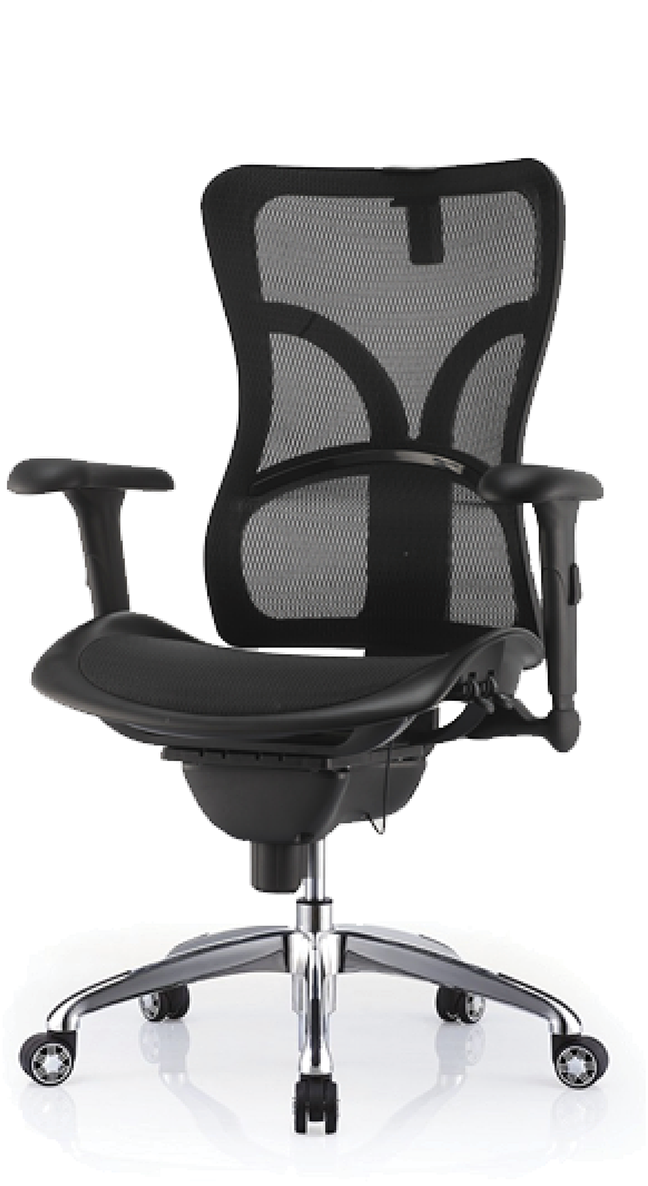
Mid-back chairs support the lumbar and thoracic regions, promoting mobility and flexibility in dynamic, collaborative environments. They are suited for shorter seated durations or for users who frequently lean forward or turn.

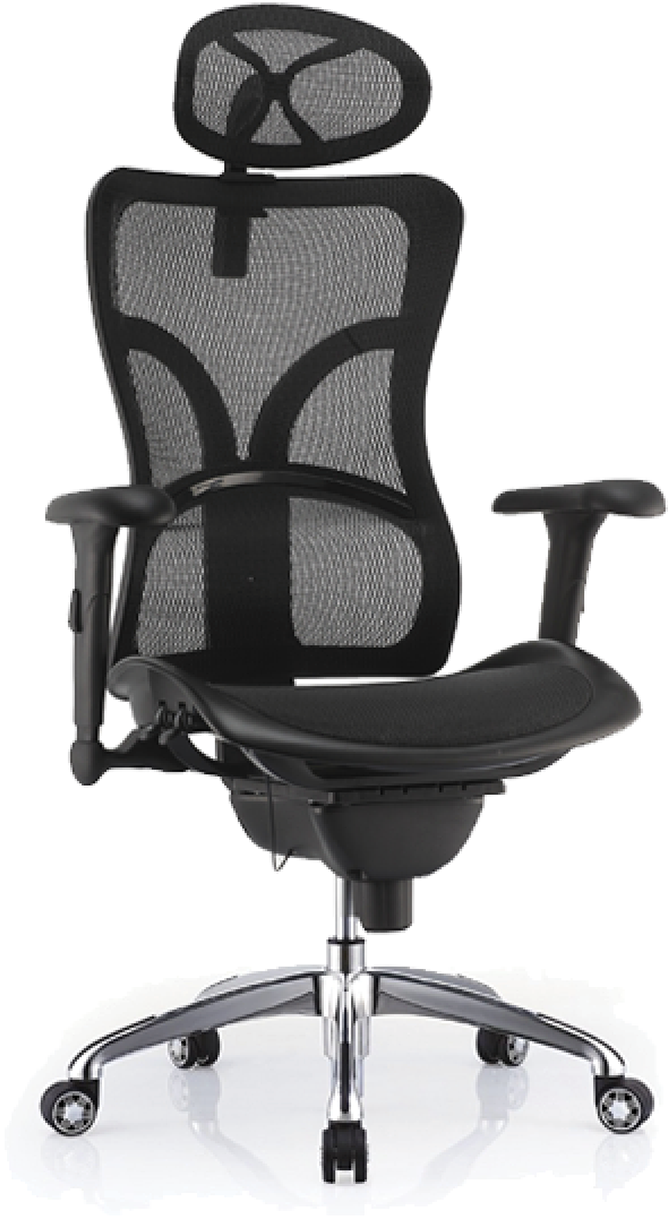
High-back chairs extend support to the upper thoracic and cervical spine, stabilising the neck and shoulders. For users engaged in prolonged computer-based work or executive functions, high-back models help reduce trapezius strain and neck discomfort [15].

DVS offers a wide selection of chairs available in both mid-back and high-back designs, including the Melvia Mesh and Hyper Mesh chair series, allowing clients to choose according to their work duration, posture habits, and aesthetic preference.

Heren Chair
Highback

Heren Chair
Midback

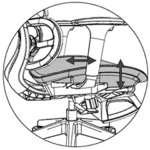
Recline and Tension Control
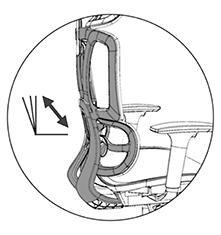
Dynamic recline promotes spinal variation and prevents sustained compression. Periodic reclining to 110 degrees relieves lumbar disc pressure and redistributes load across the spine [10, 16].

Adjustable tension allows users to control the resistance of recline, promoting small posture shifts that keep the musculoskeletal system active throughout the workday.

Headrest and Neck Support
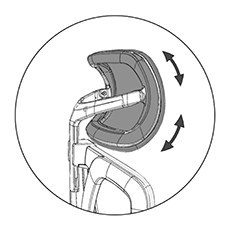
For users engaged in long screen-based tasks, headrests reduce the load on cervical muscles and prevent forward head posture, a common source of neck strain [17]. Adjustable headrests should align with the occipital region, allowing the head to rest comfortably without pushing it forward.

Armrests and Footrests
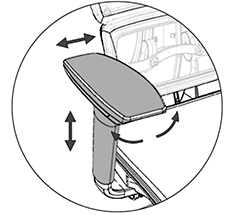
Armrests support the upper limbs, lowering strain on the shoulders and neck. Adjustable armrests, especially those allowing height and width changes, are associated with lower muscle activity in the trapezius and deltoid regions [18].
Footrests benefit shorter users by enabling stable contact with the floor and maintaining ideal hip and knee alignment, reducing thigh pressure and enhancing circulation [19].

Breathable Mesh and Upholstery
Thermal comfort and microclimate control play an underappreciated role in ergonomics. Mesh backrests improve heat dissipation and moisture regulation, while contoured foam or fabric surfaces distribute pressure evenly, reducing discomfort and restlessness [20].
In Singapore’s tropical climate, breathable materials such as mesh offer a cooler, longer-lasting seating experience without compromising structural support.

Base Stability and Mobility
A five-point base enhances balance and prevents tipping during movement. Casters should be matched to flooring type — hard casters for carpeted surfaces, soft polyurethane casters for hard floors — to ensure smooth motion and prevent strain from forced adjustments.

How DVS Holdings Integrates Science and Design

At DVS Holdings, ergonomics is a guiding principle. Every chair is developed with input from design engineers, health researchers, and end users to ensure both form and function serve long-term well-being.

Our office chair collections include models with adjustable lumbar support, multi-tilt mechanisms, breathable mesh, and full or mid-back configurations tailored to different roles and durations of use. The Mui chair balances affordability with refined ergonomics, while the Heren chair integrates high-performance materials and design for executive environments.

Designing Healthier Workspaces with DVS

The modern ergonomic workspace is best understood as a complete ecosystem — one where seating, desk design, and spatial layout work together to promote movement, posture, and productivity. Adjustable seating complements our Altimate height-adjustable tables, allowing users to shift naturally between sitting and standing, while thoughtful spatial planning enhances focus and flow.

In line with our commitment to creating to healthier workplace, DVS incorporates E0 and E1 low-emission boards and responsibly sourced materials to safeguard both indoor air quality and environmental well-being (see our article on Formaldehyde and Indoor Air Quality). Through our Bespoke Carpentry service, we also collaborate with architects, designers, and corporate clients to develop tailored ergonomic solutions that integrate seamlessly into each project’s aesthetic and functional goals.

By uniting movement-friendly furniture, material safety, and custom craftsmanship, DVS reimagines the workspace as a living system — one that nurtures health, comfort, and performance in every dimension.

Conclusion

Ergonomics is more than comfort — it is the science of aligning design with human anatomy to support health, focus, and efficiency. Scientifically designed chairs not only reduce pain and fatigue but also enhance circulation, posture, and mental clarity.

At DVS Holdings, we integrate research-driven ergonomic principles into every design, reimagining healthier, smarter, and more thoughtfully crafted workspaces that inspire comfort, focus, and well-being. Whether in collaborative offices, executive suites, or custom environments, choosing the right chair is an investment in better workdays, healthier teams, and a more sustainable future.

[1] Lis, A. M., Black, K. M., Korn, H., & Nordin, M. (2007). Association between sitting and occupational LBP. European Spine Journal, 16(2), 283–298. https://doi.org/10.1007/s00586-006-0143-7

[2] Mörl, F., & Bradl, I. (2013). Lumbar posture and muscular activity while sitting during office work. Applied Ergonomics, 44(1), 119–125. https://doi.org/10.1016/j.apergo.2012.05.004

[3] Claus, A. P., Hides, J. A., Moseley, G. L., & Hodges, P. W. (2008). Sitting versus standing: Postural and muscle activity differences. Spine, 33(16), 1728–1734. https://doi.org/10.1097/BRS.0b013e31817bfe42

[4] Thirupathi, S., & Vinod, B. (2021). Venous pooling and lower-limb circulation in prolonged sitting. Journal of Vascular Research, 58(4), 270–279. https://doi.org/10.1159/000517835

[5] Parry, S., & Straker, L. (2013). The contribution of office work to sedentary behaviour. Public Health, 127(7), 602–608. https://doi.org/10.1016/j.puhe.2013.01.019

[6] Woods, V. (2005). Musculoskeletal disorders and visual strain in computer work. Occupational Medicine, 55(2), 121–127. https://doi.org/10.1093/occmed/kqi191

[7] O’Sullivan, P. B., et al. (2012). The effect of sustained sitting on trunk muscle activity and spine posture. Manual Therapy, 17(5), 472–478. https://doi.org/10.1016/j.math.2012.04.007

[8] Lee, J. H., et al. (2015). Effect of lumbar support on sitting pressure and muscle activity. Journal of Physical Therapy Science, 27(12), 3873–3876. https://doi.org/10.1589/jpts.27.3873

[9] Makhsous, M., Lin, F., Bankard, J., Hendrix, R. W., Hepler, M., & Press, J. (2003). Biomechanical evaluation of sitting posture in relation to seat design. Spine, 28(11), 1149–1155. https://doi.org/10.1097/00007632-200306010-00013

[10] Andersson, B. J. G., et al. (1974). The influence of backrest inclination and lumbar support on lumbar lordosis. Spine, 19(2), 165–171.

[11] Kwon, J. W., et al. (2020). Micro-movements while sitting: Physiological and cognitive implications. Applied Ergonomics, 85, 103083. https://doi.org/10.1016/j.apergo.2020.103083

[12] Lin, Y. H., & Chan, C. C. (2007). Effects of seat height and footrest on lower-extremity circulation. Human Factors, 49(4), 706–715. https://doi.org/10.1518/001872007X215801

[13] Makhsous, M., et al. (2009). Sitting posture and lumbar muscle fatigue. Clinical Biomechanics, 24(6), 427–433. https://doi.org/10.1016/j.clinbiomech.2009.02.001

[14] Shinohara, M., et al. (2022). Influence of adjustable lumbar support on spinal curvature and muscle activity. Ergonomics, 65(10), 1467–1477. https://doi.org/10.1080/00140139.2022.2040294

[15] Straker, L., Burgess-Limerick, R., Pollock, C., Murray, K., & Mathiassen, S. E. (2019). Neck posture, visual demand, and performance in computer work. Applied Ergonomics, 75, 147–154. https://doi.org/10.1016/j.apergo.2018.10.011

[16] Vergara, M., & Page, Á. (2002). Relationship between comfort and back posture in sitting. Human Factors, 44(3), 353–361. https://doi.org/10.1518/0018720024497705

[17] Szeto, G. P. Y., Straker, L., & O’Sullivan, P. B. (2005). Neck and shoulder muscle activity during computer work. Spine, 30(11), E269–E277. https://doi.org/10.1097/01.brs.0000163749.67591.04

[18] Drury, C. G., et al. (2008). The effects of armrest height on shoulder muscle activity. International Journal of Industrial Ergonomics, 38(7), 646–652. https://doi.org/10.1016/j.ergon.2008.02.002

[19] Lueder, R., & Rice, V. (Eds.). (2008). Ergonomics for Children and Educational Environments. CRC Press.

[20] Smardzewski, J. (2020). Thermal comfort and pressure distribution in office chairs. Materials, 13(23), 5342. https://doi.org/10.3390/ma13235342